Every piece has a story
A look at the kinds of pieces members receive in this category, and the stories behind them.
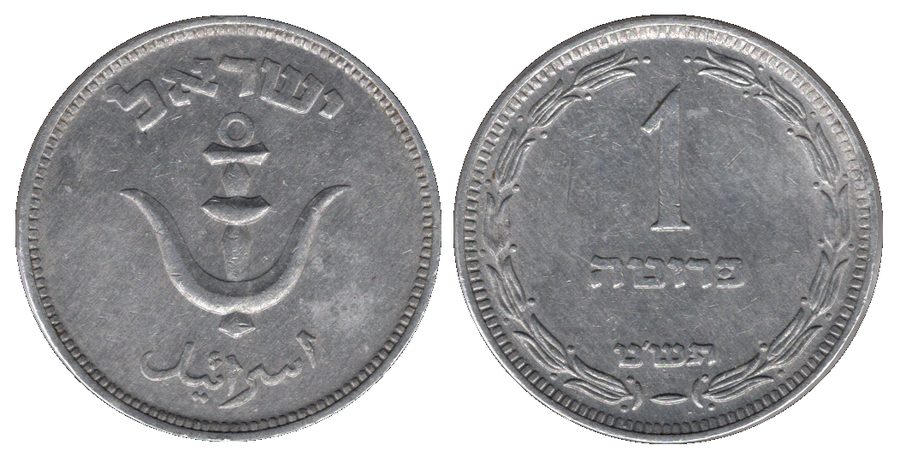
1 Pruta, 1949
Among the very first coins of the new State of Israel. Its design was taken from ancient Jewish coins, a deliberate link between the young country and Jewish coinage struck in the same land 2,000 years earlier.
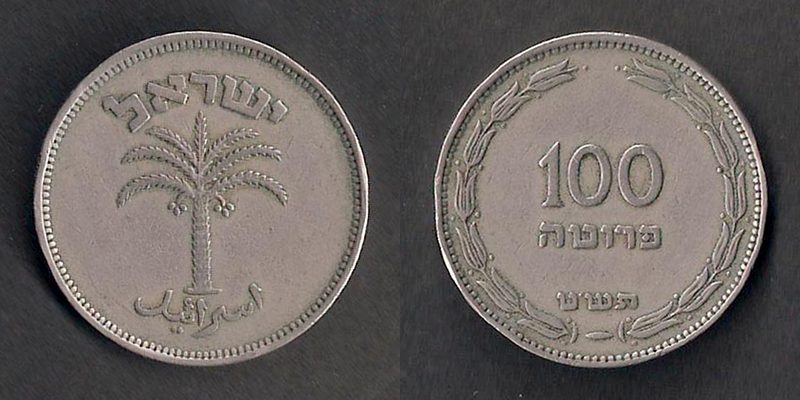
100 Pruta: Date Palm
The seven-branched date palm on this coin comes from a coin of the Bar Kokhba revolt. The pruta series lasted only until 1960, making these early coins a favorite of collectors.
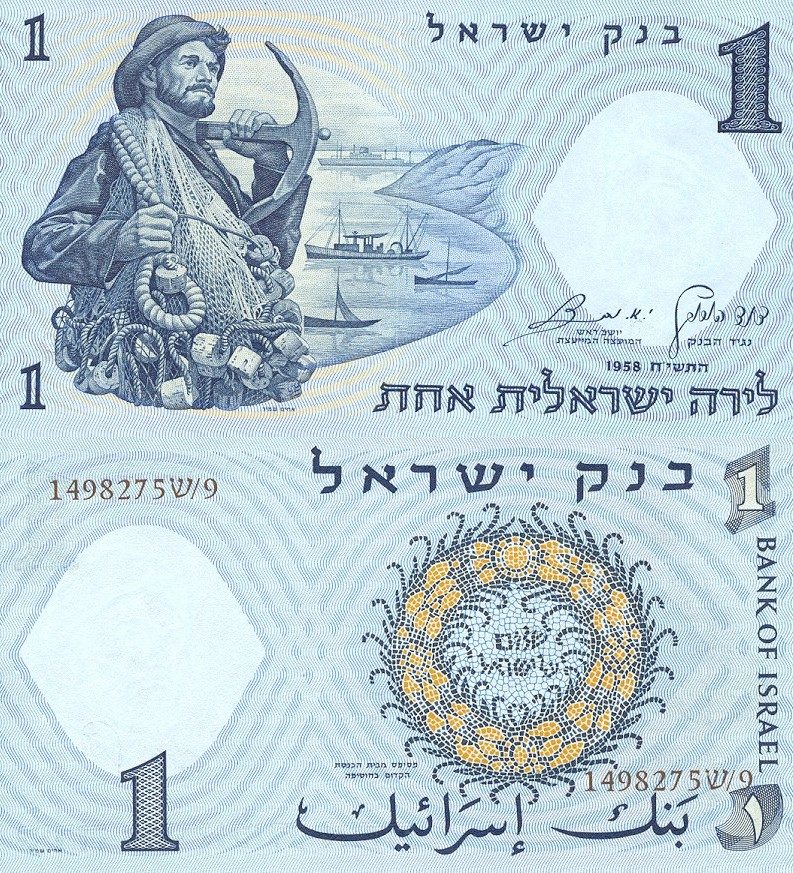
1 Lira Banknote, 1958
Israel’s 1958 banknotes honored the people building the new state, and this one-lira note shows a fisherman at work. Paper money from Israel’s first decade is a vivid snapshot of those years.
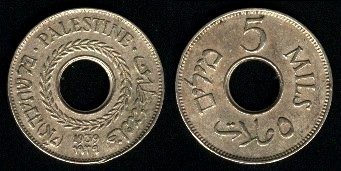
Mandate 5 Mils Coin
Struck from 1927 until 1947, these holed coins read “Palestine” in English, Arabic and Hebrew, with the Hebrew adding the initials for Eretz Yisrael, the Land of Israel. They were the pocket change of the Jewish community in the years before statehood.
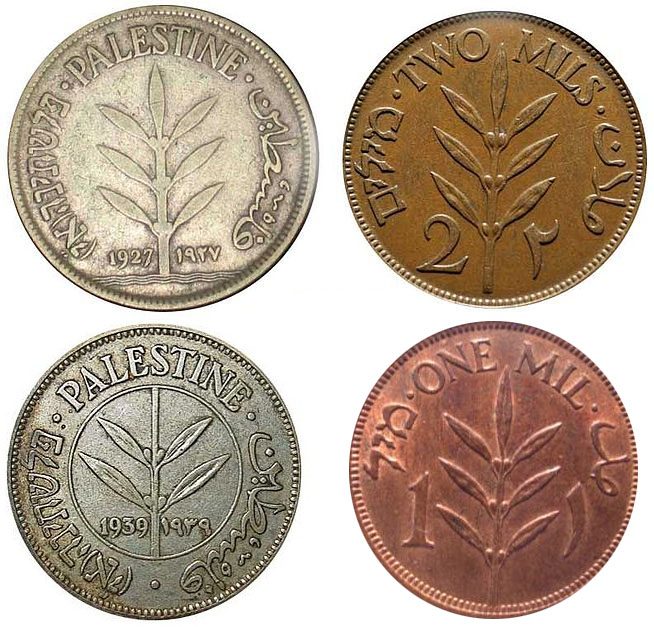
British Mandate Coins
The Mandate’s coins, with their simple olive sprig, were minted for twenty years before Israel’s independence. Each one passed through the markets of Jerusalem, Tel Aviv and Haifa.
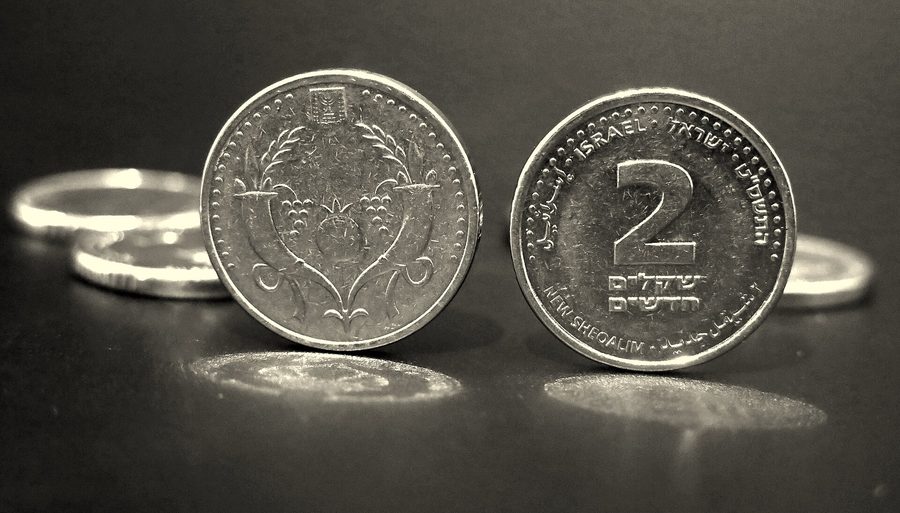
2 New Shekels
Introduced in 2008, the two-shekel coin carries a pair of cornucopias taken from a coin of the Hasmonean kings. It’s a modern coin with an ancient story, still in everyday use in Israel today.
Examples shown are for illustration. Actual pieces vary month to month.